

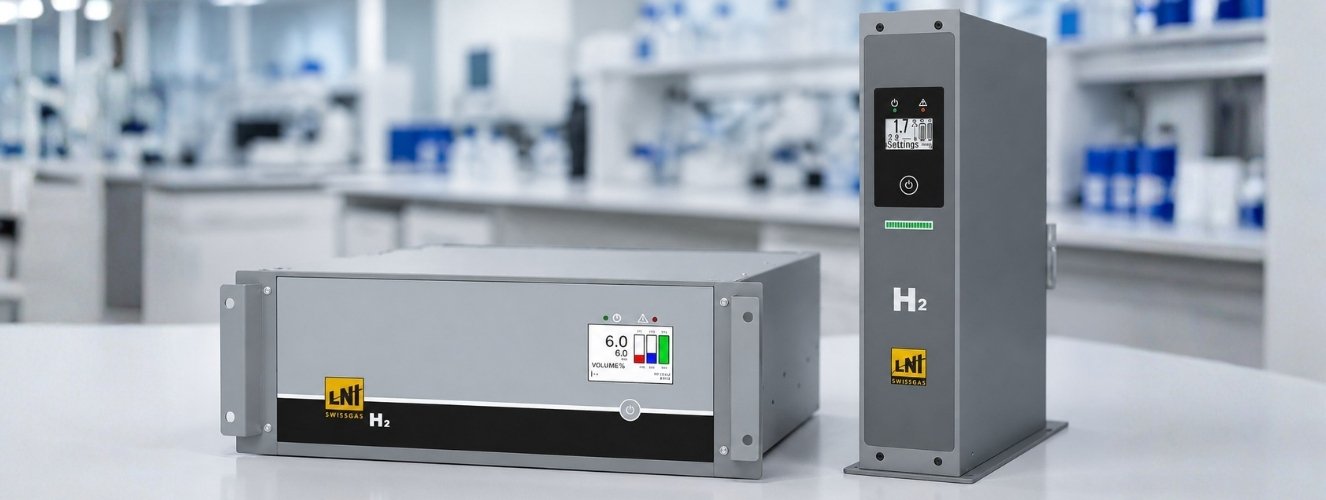
Modern analytical laboratories require a continuous supply of high-purity gases for accurate testing, reliable instrument performance, and efficient laboratory workflows. Traditionally, laboratories depended on bulky gas cylinders that required regular replacement, storage space, and strict safety handling. However, advancements in analytical technology have introduced a safer, cost-effective, and more efficient alternative — the Laboratory Gas Generator.
Today, laboratory gas generators are widely used in pharmaceutical industries, research laboratories, environmental testing facilities, semiconductor industries, and analytical laboratories for generating gases such as nitrogen, hydrogen, and zero air on demand.
As a trusted Scientific Equipment Supplier in India and Analytical Instruments Distributor in India, Optilab Technologies provides advanced Laboratory Gas Generator, Nitrogen Gas Generator, and Hydrogen Gas Generators for modern laboratory applications across India.
What is a Laboratory Gas Generator?
A Laboratory Gas Generator is an advanced analytical system designed to generate high-purity gases directly inside the laboratory. These systems eliminate the need for traditional gas cylinders by producing gases continuously from compressed air, water, or other sources.
Laboratory gas generators are commonly used with:
- Gas Chromatography (GC) systems
- LC-MS systems
- ICP-MS instruments
- FTIR and Raman Spectroscopy systems
- Laboratory analytical instruments
- Research and testing applications
These systems improve laboratory safety, reduce operating costs, and ensure an uninterrupted gas supply for analytical instruments.
Why Laboratories Need Gas Generators
Modern analytical instruments require highly pure and stable gas supplies for accurate results. Traditional gas cylinders often create several operational challenges such as:
- Frequent cylinder replacement
- High transportation costs
- Risk of gas leakage
- Laboratory safety concerns
- Storage space requirements
- Inconsistent gas supply
A Laboratory Gas Generator solves these problems by generating gases on-site whenever needed.
Working Principle of Laboratory Gas Generator
The working principle of a Laboratory Gas Generator depends on the type of gas being generated. Most systems use filtration, membrane separation, pressure swing adsorption (PSA), or electrolysis technology to produce high-purity gases.
Working of Nitrogen Gas Generator
A Nitrogen Gas Generator typically works using:
- Pressure Swing Adsorption (PSA) technology
- Membrane separation technology
Compressed air enters the system, where oxygen, moisture, and impurities are removed, leaving behind high-purity nitrogen gas.
Applications:
- LC-MS systems
- Sample evaporation
- Food packaging analysis
- Chemical testing laboratories
Nitrogen generators provide a continuous and reliable nitrogen supply for analytical applications.
Working of Hydrogen Gas Generator
A Hydrogen Gas Generator works through the electrolysis of water. The system separates hydrogen and oxygen molecules using electrical energy, producing highly pure hydrogen gas.
Applications:
- Gas Chromatography (GC-FID)
- Laboratory analytical systems
- Research laboratories
- Pharmaceutical testing
Hydrogen generators provide safe and efficient hydrogen production without relying on external cylinders.
Working of Zero Air Generator
A Zero Air Generator removes hydrocarbons, moisture, and impurities from compressed air to produce clean air for laboratory instruments.
Applications:
- Gas chromatography systems
- Environmental monitoring
- Air quality analysis
- Hydrocarbon analysis
These systems help maintain analytical accuracy and stable baseline performance.
Types of Laboratory Gas Generators
Nitrogen Gas Generator
A Nitrogen Gas Generator is widely used in:
- LC-MS applications
- Sample preparation
- Analytical laboratories
- Pharmaceutical industries
Advantages:
- Continuous nitrogen supply
- Low operating cost
- High gas purity
- Reduced cylinder dependency
Hydrogen Gas Generator
A Hydrogen Gas Generator is commonly used for:
- GC-FID systems
- Carrier gas applications
- Research laboratory instruments
Advantages:
- Safe hydrogen production
- Compact system design
- Improved laboratory safety
- Consistent gas purity
Combined Gas Generator
A Combined Gas Generator produces multiple gases, such as hydrogen, nitrogen, and zero air, from a single system.
Benefits:
- Space-saving design
- Multi-instrument support
- Reduced maintenance
- Efficient laboratory operation
Zero Air Generator
A Zero Air Generator is designed for applications requiring hydrocarbon-free air.
Applications:
- Gas chromatography
- Environmental analysis
- Air monitoring systems
These systems improve instrument sensitivity and analytical performance.
Applications of Laboratory Gas Generators
Pharmaceutical Laboratories
Gas generators support:
- Drug testing
- Quality control
- Dissolution analysis
- Chromatography applications
These systems help maintain analytical precision and regulatory compliance.
Chemical & Petrochemical Industries
Analytical laboratories use gas generators for:
- Chemical composition analysis
- Process monitoring
- Gas chromatography testing
- Material analysis
Environmental Testing Laboratories
Gas generators support:
- Air quality analysis
- Water testing
- Environmental monitoring
- Pollutant detection
Semiconductor Industries
Semiconductor laboratories require high-purity gases for:
- Material characterization
- Surface analysis
- Research applications
Reliable gas purity is essential for accurate semiconductor testing.
Food & Beverage Industry
Laboratory gas generators are used for:
- Food safety analysis
- Packaging testing
- Beverage quality control
These systems support efficient quality assurance workflows.
Advantages of Laboratory Gas Generators
Continuous Gas Supply
Gas generators provide uninterrupted gas production without cylinder replacement.
Improved Laboratory Safety
Eliminating high-pressure gas cylinders reduces the risk of accidents and gas leaks.
Cost-Effective Operation
Laboratories save money on:
- Cylinder transportation
- Gas refilling
- Storage and maintenance costs
High Gas Purity
Modern systems deliver highly pure gases suitable for sensitive analytical instruments.
Compact and Space-Saving Design
Gas generators occupy less laboratory space compared to multiple gas cylinders.
Reduced Downtime
Continuous gas availability improves instrument uptime and laboratory productivity.
How Laboratory Gas Generators Improve Analytical Performance
Analytical instruments such as GC, LC-MS, and ICP-MS require stable gas flow and purity for accurate results. Laboratory gas generators help:
- Improve baseline stability
- Reduce contamination risks
- Maintain analytical consistency
- Increase instrument reliability
These systems ensure smooth laboratory operation and reliable analytical workflows.
Factors to Consider Before Buying a Laboratory Gas Generator
Before selecting a gas generator, laboratories should consider:
- Required gas purity level
- Gas flow rate requirements
- Instrument compatibility
- Laboratory workload
- Maintenance requirements
- Future scalability
Choosing the right system helps improve long-term analytical efficiency.
Why Choose Optilab Technologies?
Optilab Technologies is a trusted Laboratory Instruments Supplier and Analytical Instrumentation Company offering advanced:
- Laboratory Gas Generator systems
- Nitrogen Gas Generators
- Hydrogen Gas Generators
- Combined Gas Generators
- Analytical laboratory solutions
We provide:
- Expert technical consultation
- PAN India delivery and installation
- Reliable after-sales support
- High-performance analytical systems
Our solutions are widely used in pharmaceutical laboratories, research institutions, semiconductor industries, and industrial analytical facilities
Conclusion
Laboratory Gas Generators have transformed modern analytical laboratories by providing safe, continuous, and high-purity gas generation solutions. These systems improve laboratory efficiency, reduce operational costs, and support accurate analytical performance for advanced laboratory instruments.
From pharmaceuticals and environmental testing to semiconductor research and industrial quality control, laboratory gas generators play a critical role in modern scientific workflows.
If you are looking for advanced Laboratory Gas Generator, Nitrogen Gas Generator, or Hydrogen Gas Generators in India, Optilab Technologies provides reliable analytical solutions tailored to modern laboratory requirements.
Contact us today for expert consultation, pricing, and technical support for laboratory gas generation systems.