

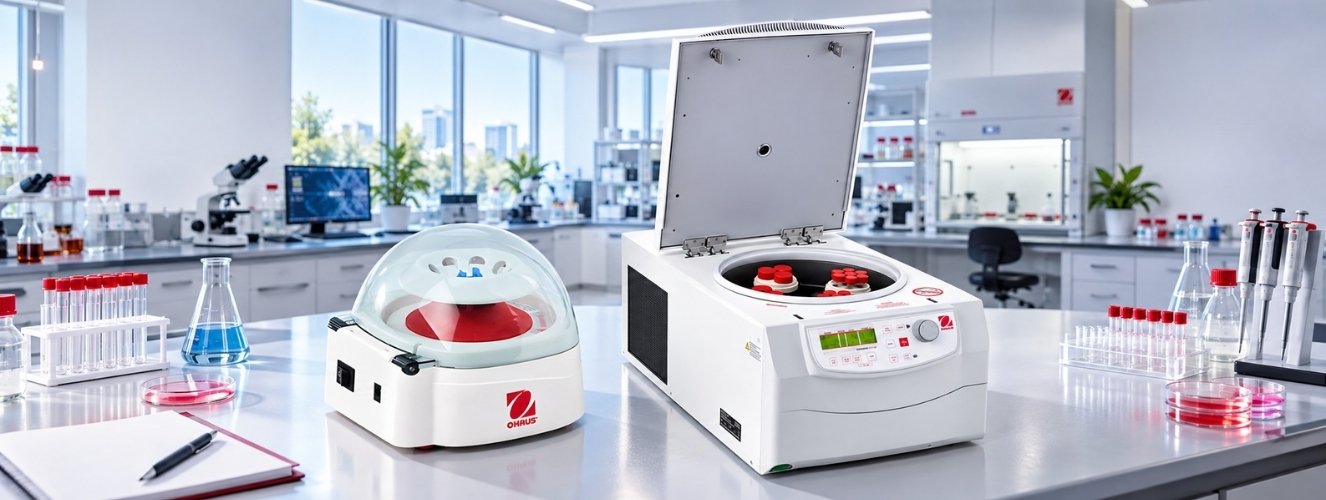
A laboratory centrifuge is an important piece of equipment used to separate components of samples based on differences in density. Centrifuges are widely used in research, pharmaceutical, chemical, food, environmental, and testing laboratories.
With different centrifuge types, rotor configurations, capacities, and operating speeds available, selecting the right equipment depends on the sample type, application, required separation, capacity, and laboratory workflow.
This guide explains the key factors to consider when choosing a laboratory centrifuge for different applications.
What Is a Laboratory Centrifuge?
A laboratory centrifuge is an instrument that uses centrifugal force to separate components within a sample. When a sample is rotated at a controlled speed, components with different densities can separate into distinct phases or layers.
Laboratory centrifuges can be used for applications such as:
- Sample preparation
- Separation of suspended particles
- Chemical analysis
- Pharmaceutical research
- Research and development
- Quality control
- Cell and sample processing
- Food testing
- Environmental laboratory applications
The appropriate centrifuge depends on the specific separation process and sample requirements.
How Does a Laboratory Centrifuge Work?
A centrifuge places sample containers in a rotor that rotates around a central axis. During rotation, centrifugal force causes denser components to move away from the centre more strongly than less-dense components.
The separation achieved depends on factors such as:
- Rotational speed
- Relative centrifugal force (RCF)
- Rotor type
- Sample properties
- Centrifugation time
- Temperature requirements
- Sample volume
Understanding these factors can help laboratories select equipment suitable for their applications.
Types of Laboratory Centrifuges
Different laboratory applications require different centrifuge configurations.
Benchtop Centrifuge
A benchtop centrifuge is designed for laboratory environments where compact equipment and routine sample processing are required.
It can be suitable for laboratories performing regular separation tasks while working with limited bench or floor space.
High-Speed Centrifuge
High-speed centrifuges are designed for applications requiring higher rotational speeds and greater centrifugal forces. They can be used for specific research and analytical applications depending on sample requirements.
Refrigerated Centrifuge
A refrigerated centrifuge maintains controlled temperature conditions during centrifugation. This can be useful when samples are sensitive to temperature changes or when the application requires temperature control.
Microcentrifuge
Microcentrifuges are designed for small-volume sample tubes and are commonly used in laboratories performing small-scale sample preparation and separation.
How to Select a Laboratory Centrifuge?
Choosing a laboratory centrifuge should begin with the application rather than simply selecting the highest-speed model available.
1. Identify the Application
First, determine what you need to separate and why.
For example, the requirements for routine sample preparation may differ from those for pharmaceutical research, chemical testing, or specialised laboratory research.
Understanding the application helps narrow down the appropriate centrifuge type and configuration.
2. Consider Sample Volume
Sample volume is an important selection factor.
Determine:
- Minimum sample volume
- Maximum sample volume
- Number of samples per run
- Tube size
- Required throughput
A centrifuge should accommodate the containers and sample volumes used in your laboratory.
3. Check Speed Requirements
Centrifuge speed is commonly expressed in revolutions per minute (RPM). However, relative centrifugal force (RCF) is also important because it describes the force applied to the sample.
When comparing centrifuges, consider the RCF required for your application rather than looking only at maximum RPM.
4. Select the Appropriate Rotor
The rotor determines how samples are positioned and processed.
Common configurations include:
- Fixed-angle rotors
- Swing-out rotors
- Rotors for microtubes
- Rotors for larger sample containers
Choose a rotor based on the sample tubes, volume, separation requirements, and application.
5. Consider Temperature Control
If samples are temperature-sensitive, a refrigerated laboratory centrifuge may be appropriate.
For routine applications where temperature control is not required, a standard centrifuge may be sufficient.
6. Consider Capacity and Throughput
Laboratories handling many samples should evaluate how many tubes can be processed in a single run.
Higher capacity can help improve workflow efficiency when sample volumes and testing requirements are high.
7. Evaluate Safety Features
Safety should be an important consideration when selecting laboratory equipment.
Depending on the centrifuge design, useful features may include:
- Lid-locking mechanisms
- Imbalance detection
- Overspeed protection
- Automatic shutdown
- Rotor identification
- Emergency release mechanisms
Always follow the manufacturer’s safety instructions and laboratory operating procedures.
Choosing a Centrifuge for Different Applications
Pharmaceutical Laboratories
Pharmaceutical laboratories may use centrifuges for sample preparation, formulation studies, quality control, research, and other laboratory processes.
Selection should consider sample characteristics, required separation force, temperature requirements, and throughput.
Research Laboratories
Research laboratories often handle different sample types and volumes. A centrifuge with flexible rotor options and appropriate speed ranges can support varied workflows.
Chemical Laboratories
Chemical testing may require centrifugation as part of sample preparation or separation processes. Chemical compatibility of tubes, rotors, and other components should be considered where relevant.
Food Testing Laboratories
Food laboratories may use centrifuges for sample preparation and separation. The appropriate equipment depends on the type of sample and analytical method.
Environmental Testing Laboratories
Environmental laboratories may process water, soil extracts, and other samples. Centrifugation may be used to separate suspended material before further analysis.
Laboratory Centrifuge vs Benchtop Centrifuge
A benchtop centrifuge is a type of laboratory centrifuge designed for placement on a laboratory bench.
The choice between different centrifuge configurations depends on:
- Required capacity
- Sample volume
- Speed and RCF
- Rotor requirements
- Temperature control
- Available laboratory space
- Application
A benchtop model can be suitable for laboratories requiring compact equipment for routine centrifugation applications.
Key Features to Compare Before Buying
Before selecting laboratory centrifuge equipment, compare the following:
| Factor | What to Consider |
|---|---|
| Application | Type of sample and required separation |
| Speed | Maximum RPM and required RCF |
| Capacity | Number and volume of samples |
| Rotor | Fixed-angle, swing-out or application-specific |
| Temperature | Standard or refrigerated operation |
| Tube Compatibility | Tube size and material |
| Controls | Programmability and ease of operation |
| Safety | Lid lock, imbalance and overspeed protection |
| Space | Benchtop or floor-standing requirements |
| Maintenance | Cleaning, servicing and rotor care |
Common Mistakes When Selecting a Laboratory Centrifuge
Choosing Only Based on Maximum RPM
Maximum RPM does not always indicate whether a centrifuge is suitable for a particular application. RCF, rotor radius, and sample requirements should also be considered.
Ignoring Rotor Compatibility
A centrifuge may have the required speed but still not support the tubes or containers used in the laboratory.
Selecting Insufficient Capacity
If the laboratory processes a high number of samples, a small-capacity centrifuge may reduce workflow efficiency.
Overlooking Temperature Requirements
Temperature-sensitive samples may require controlled centrifugation conditions. This should be considered before selecting a standard model.
Not Considering Future Requirements
Laboratory requirements can change as testing volumes or applications expand. Selecting equipment with suitable flexibility can help accommodate future needs.
Frequently Asked Questions
What is a laboratory centrifuge used for?
A laboratory centrifuge is used to separate components of samples based on differences in density using centrifugal force. It is used in research, pharmaceutical, chemical, food, environmental, and testing laboratories.
What is a benchtop centrifuge?
A benchtop centrifuge is a compact laboratory centrifuge designed to operate on a laboratory bench. It is commonly used for routine sample separation and preparation.
How do I choose the right laboratory centrifuge?
Consider the application, sample volume, required RCF, rotor type, temperature requirements, capacity, tube compatibility, safety features, and available laboratory space.
Is RPM or RCF more important when choosing a centrifuge?
Both are relevant, but RCF is particularly important because it represents the centrifugal force applied to the sample. The required RCF should be considered according to the analytical or laboratory method.
When is a refrigerated centrifuge required?
A refrigerated centrifuge can be considered when samples require controlled temperature conditions during centrifugation or are sensitive to temperature changes.
Conclusion
Selecting the right laboratory centrifuge requires more than comparing maximum speed or price. Laboratories should consider the application, sample volume, required RCF, rotor configuration, temperature control, capacity, safety, and future requirements.
From benchtop centrifuges for routine laboratory work to specialised configurations for temperature-sensitive or higher-speed applications, the appropriate equipment should be matched to the laboratory’s specific workflow.
OptiLAB Technologies provides laboratory and analytical equipment solutions for different testing, research, and industrial applications. Laboratories can evaluate centrifuge options based on their sample-processing requirements and intended applications.