

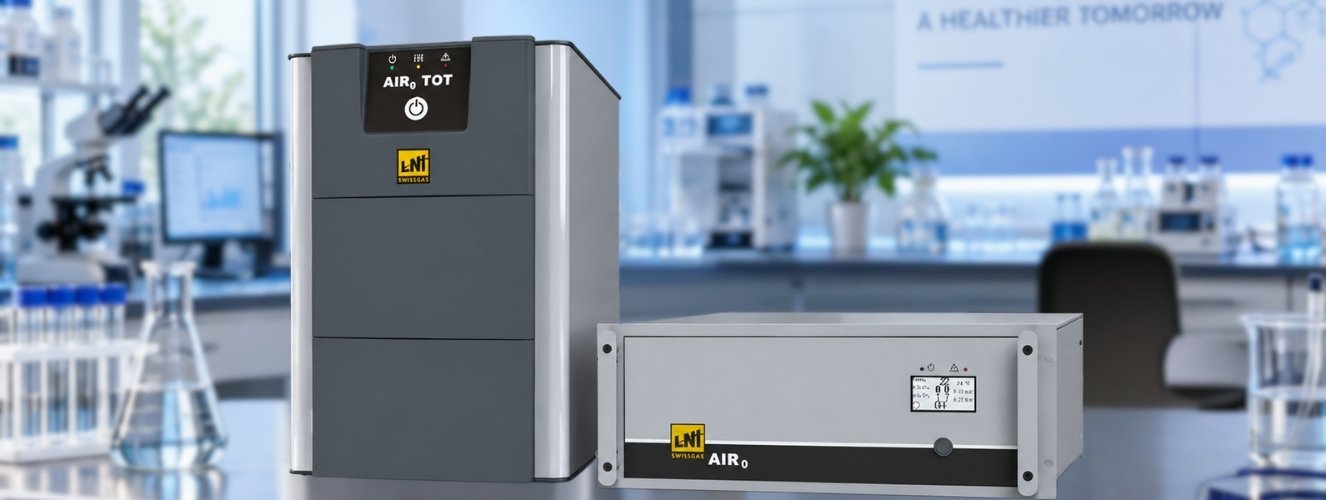
Hydrogen is used in several laboratory and analytical applications that require a reliable supply of high-purity gas. Instead of relying entirely on compressed gas cylinders, laboratories can use hydrogen gas generators to produce hydrogen on-site to meet their specific applications and gas requirements.
A hydrogen gas generator for laboratory applications can provide a convenient gas supply for analytical instruments, research processes, and other laboratory workflows. The appropriate generator depends on the required purity, flow rate, pressure, application, and operating conditions.
What Is a Hydrogen Gas Generator?
A hydrogen gas generator is a laboratory gas generation system designed to produce hydrogen for specific applications. Depending on the technology and configuration, hydrogen can be generated and supplied directly to the connected laboratory equipment.
Hydrogen generators are used in applications where laboratories require a consistent hydrogen supply without relying solely on stored gas cylinders.
Common applications include:
- Gas chromatography
- Analytical instrumentation
- Laboratory research
- Instrument carrier gas applications
- Fuel gas applications
- Chemical analysis
- Research and development
- Other specialised laboratory processes
Why Are Hydrogen Generators Used in Laboratories?
Laboratories may use hydrogen generators as an alternative or supplement to traditional hydrogen gas cylinders. On-site generation can help laboratories manage their gas supply according to instrument requirements.
Some potential advantages include:
- On-demand hydrogen generation
- Reduced dependence on gas-cylinder storage
- Convenient gas supply
- Suitable for continuous laboratory workflows
- Compact solutions for laboratory environments
- Reduced requirement for handling multiple cylinders
The actual benefits depend on the generator technology, laboratory application, and operating conditions.
Applications of Hydrogen Gas Generators
1. Gas Chromatography
One of the important applications of hydrogen generators is gas chromatography (GC). Hydrogen may be used as a carrier gas or detector gas depending on the GC configuration and analytical method.
A dedicated hydrogen generator for laboratory use can provide gas directly to compatible analytical instruments.
2. Analytical Laboratories
Analytical laboratories may require hydrogen for different instrument and testing applications. A suitable hydrogen generation system can provide an on-site source for compatible equipment.
3. Research Laboratories
Research laboratories may use hydrogen for experimental processes, analytical instruments, and specialised research applications.
The generator should be selected according to the required gas purity, flow, pressure, and application.
4. Instrument Gas Supply
Certain analytical instruments require specific gases for operation. A laboratory hydrogen generator can be integrated into an appropriate instrument gas supply setup where hydrogen is required.
Hydrogen Gas Generator vs Hydrogen Gas Cylinder
Both hydrogen generators and gas cylinders can provide hydrogen for laboratory applications, but they work differently.
A cylinder stores a fixed quantity of compressed hydrogen, while a generator produces hydrogen on demand.
When evaluating these options, laboratories may consider:
- Gas consumption
- Required flow rate
- Purity requirements
- Available laboratory space
- Cylinder handling requirements
- Operating requirements
- Instrument compatibility
- Maintenance requirements
The most suitable option depends on the laboratory’s specific application and gas demand.
How Does a Laboratory Hydrogen Generator Work?
Hydrogen generators use a dedicated generation technology to produce hydrogen from an appropriate feed source. The generated gas is then treated and supplied to the connected application according to the system’s specifications.
Different hydrogen generators can have different operating principles, capacities, purity levels, and output configurations.
Therefore, laboratories should refer to the manufacturer’s specifications when selecting a system for a particular analytical instrument or application.
How to Choose a Hydrogen Gas Generator for a Laboratory?
Selecting a hydrogen gas generator for laboratory applications requires consideration of several factors.
1. Required Hydrogen Purity
Determine the purity required by the analytical instrument or laboratory application. Sensitive analytical applications may have specific gas-quality requirements.
2. Flow Rate
The generator should provide an appropriate hydrogen flow rate for the connected instrument or application.
3. Operating Pressure
Check the pressure requirements of the analytical equipment before selecting a generator.
4. Application Compatibility
Identify whether the hydrogen will be used for gas chromatography, analytical instrumentation, research, or another laboratory application.
5. Installation Requirements
Consider laboratory space, ventilation, connections, power requirements, and installation conditions.
6. Maintenance Requirements
Evaluate routine maintenance, consumables, monitoring requirements, and technical support before purchasing a laboratory hydrogen generator.
Benefits of On-Site Hydrogen Generation
Using a suitable hydrogen generator for laboratory applications can offer several operational advantages.
On-Demand Supply
Hydrogen can be generated according to the laboratory’s requirements instead of depending entirely on stored cylinders.
Convenient Operation
An on-site generator can simplify gas supply management for compatible laboratory applications.
Reduced Cylinder Handling
Depending on the setup and gas consumption, on-site generation can reduce the need for frequent cylinder replacement and handling.
Consistent Supply
A properly selected generator can provide a continuous hydrogen supply for compatible laboratory instruments and applications.
Hydrogen Generators for Analytical Instruments
Hydrogen requirements can vary significantly between analytical instruments. Before selecting a generator, laboratories should verify:
- Required purity
- Flow rate
- Pressure
- Gas consumption
- Instrument compatibility
- Connection requirements
- Operating conditions
This is particularly important for applications involving analytical instruments such as gas chromatographs.
Safety Considerations for Laboratory Hydrogen Generators
Hydrogen is a flammable gas, so appropriate safety practices are essential when using hydrogen generation equipment.
Laboratories should:
- Follow the manufacturer’s installation instructions.
- Ensure suitable ventilation.
- Follow laboratory safety procedures.
- Use appropriate gas connections and fittings.
- Maintain the equipment according to manufacturer recommendations.
- Keep the system away from ignition sources.
- Ensure personnel are appropriately trained.
- Follow applicable laboratory and workplace safety requirements.
Safety requirements should always be evaluated according to the specific equipment, installation environment, and application.
Frequently Asked Questions
What is a hydrogen gas generator for laboratory use?
A hydrogen gas generator is a system designed to produce hydrogen on-site for compatible laboratory applications such as gas chromatography, analytical instrumentation, and research.
Why use a hydrogen generator instead of a gas cylinder?
A hydrogen generator can produce gas on demand and may reduce dependence on cylinder storage and replacement. The appropriate option depends on laboratory consumption, application, equipment requirements, and operating conditions.
Where are hydrogen generators used in laboratories?
Hydrogen generators can be used for applications such as gas chromatography, analytical instrumentation, research, and other laboratory processes requiring a hydrogen supply.
How do I choose a laboratory hydrogen generator?
Consider hydrogen purity, flow rate, operating pressure, application, instrument compatibility, installation requirements, maintenance, and laboratory gas demand.
Are hydrogen generators suitable for gas chromatography?
Hydrogen generators can be used with compatible gas chromatography systems where hydrogen is specified as a carrier or detector gas. The generator’s output specifications should match the requirements of the GC system.
Conclusion
Hydrogen gas generators for laboratories can provide an on-site hydrogen supply for analytical instruments, gas chromatography, research, and other compatible laboratory applications. They offer an alternative to relying entirely on compressed gas cylinders and can simplify gas supply management when properly selected.
Before purchasing a laboratory hydrogen generator, laboratories should evaluate purity, flow rate, pressure, application requirements, instrument compatibility, installation conditions, maintenance, and safety considerations.
OptiLAB Technologies provides laboratory and analytical instrument solutions and can help laboratories evaluate suitable equipment based on their specific application and operational requirements.