

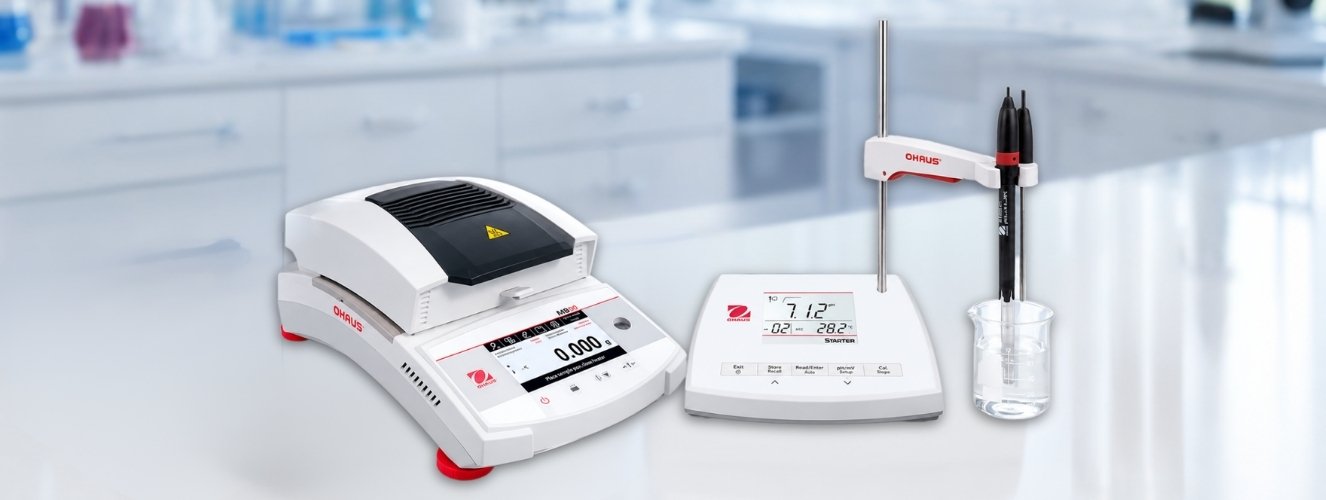
Testing laboratories require accurate, reliable, and application-specific equipment to analyse materials, identify compounds, measure physical properties, and maintain quality standards. From pharmaceutical and food testing to chemical, environmental, polymer, and research applications, the right analytical instruments play an important role in obtaining consistent and dependable results.
With advancements in laboratory technology, laboratories can choose from a wide range of laboratory instruments, analytical equipment, scientific instruments, and laboratory testing equipment. Selecting the right system depends on the type of sample, testing requirements, accuracy, throughput, and application.
What Are Analytical Instruments?
Analytical instruments are laboratory equipment used to identify, quantify, characterise, or measure the chemical and physical properties of a sample. They are widely used in research, quality control, production, testing, and material analysis.
Common applications include:
- Chemical composition analysis
- Material identification
- Elemental analysis
- Moisture measurement
- Pharmaceutical testing
- Food and beverage testing
- Environmental analysis
- Polymer testing
- Water quality testing
- Research and development
- Quality control and assurance
For testing laboratories, analytical instruments help improve measurement accuracy, repeatability, and efficiency across different testing workflows.
Essential Analytical Instruments for Testing Laboratories
The equipment required depends on the laboratory’s specific applications. However, several categories of analytical laboratory instruments are commonly used across research and testing environments.
1. UV-Vis Spectrophotometers
A UV-Vis spectrophotometer measures the absorption of ultraviolet and visible light by a sample. It can be used for quantitative analysis, concentration measurements, and various chemical and biochemical applications.
UV-Vis instruments are commonly found in pharmaceutical, chemical, food, environmental, and research laboratories.
2. FTIR Spectrometers
FTIR spectrometers are used to identify materials and analyse chemical bonds based on infrared absorption. They are useful for material identification, quality control, polymer testing, pharmaceutical analysis, and chemical research.
FTIR technology can also support applications where laboratories need rapid identification of unknown materials or verification of raw materials.
3. Raman Spectrometers
Raman spectroscopy provides molecular information based on the interaction of light with a sample. Raman instruments can be used for material identification, chemical analysis, pharmaceutical research, and polymer applications.
Handheld and benchtop Raman systems can provide flexibility for different laboratory and testing requirements.
4. ICP-OES Spectrometers
ICP-OES spectrometers are used for elemental analysis and can determine the concentration of multiple elements in suitable samples.
They are used in applications such as environmental testing, chemical analysis, materials testing, pharmaceutical analysis, and research laboratories.
5. XRF Spectrometers
X-ray fluorescence (XRF) spectrometers are used for elemental analysis and material characterisation. Portable and handheld XRF systems can be useful where rapid, non-destructive analysis is required.
Applications may include metals, minerals, industrial materials, polymers, and other sample types depending on the instrument configuration.
6. Moisture Analyzers
A laboratory moisture analyzer is used to determine moisture content in samples. Moisture measurement can be important for quality control, raw-material testing, food analysis, pharmaceutical applications, and other laboratory processes.
Halogen moisture analyzers are one technology used for rapid moisture determination.
7. Laboratory Water Purification Systems
Water quality can directly affect laboratory testing and analytical results. Laboratory water purification systems are therefore important for laboratories requiring purified, deionized, or ultrapure water.
Depending on the application, laboratories may use:
- Deionized water systems
- Ultrapure water systems
- Laboratory water purification systems
- DM water systems
The required water quality should be selected according to the analytical method and laboratory application.
8. Laboratory Centrifuges
Laboratory centrifuges separate components of samples using centrifugal force. They are commonly used in research, pharmaceutical, biological, chemical, and testing laboratories.
Benchtop centrifuges can be suitable for laboratories where space and sample-processing requirements need to be considered.
9. Laboratory Shakers and Mixers
Laboratory shakers and mixers are used to mix, agitate, or prepare samples. Different types, such as orbital shakers, reciprocating shakers, vortex mixers, and overhead stirrers, are available for different applications.
The appropriate equipment depends on sample characteristics, mixing requirements, speed, capacity, and application.
10. pH, Conductivity and Water Quality Meters
Water and solution testing often requires measurement of parameters such as pH and conductivity. Laboratories may use pH meters, conductivity meters, dissolved oxygen meters, turbidity meters, and water quality meters depending on the testing requirement.
These instruments are commonly used in environmental, food, chemical, research, and water testing applications.
Analytical Instruments for Different Testing Applications
Different laboratories require different combinations of scientific laboratory equipment.
Pharmaceutical Testing Laboratories
Pharmaceutical laboratories may require analytical instruments for:
- Raw material testing
- Quality control
- Product analysis
- Moisture determination
- Melting point testing
- Dissolution testing
- Material identification
Relevant equipment can include UV-Vis spectrophotometers, FTIR systems, moisture analyzers, melting point apparatus, dissolution apparatus, and other analytical laboratory equipment.
Food Testing Laboratories
Food testing laboratories may use analytical equipment for:
- Raw material analysis
- Quality control
- Moisture testing
- Chemical analysis
- Water testing
- Product characterisation
Depending on the application, laboratories may require moisture analyzers, spectrophotometers, water quality meters, analytical balances, and other food testing laboratory instruments.
Chemical Testing Laboratories
Chemical laboratories often require instruments for material identification, elemental analysis, concentration measurement, and quality control.
FTIR spectrometers, Raman spectrometers, ICP-OES systems, XRF instruments, UV-Vis spectrophotometers, and other analytical equipment can support different chemical testing applications.
Polymer and Material Testing
For polymer and material analysis, laboratories may require instruments for material identification, composition analysis, and quality assessment.
FTIR for polymer testing, Raman spectroscopy, XRF analysis, and other material characterisation instruments can be selected according to the sample and testing method.
Environmental Testing Laboratories
Environmental laboratories may perform analysis of water, soil, and other environmental samples. Depending on the testing requirements, laboratories may use:
- ICP-OES systems
- Water quality meters
- pH meters
- Conductivity meters
- Dissolved oxygen meters
- Turbidity meters
- Other analytical instruments
How to Choose Analytical Instruments for a Testing Laboratory?
Choosing laboratory equipment should begin with the testing requirements rather than simply selecting an instrument based on specifications.
Consider the following factors:
1. Testing Application
Define exactly what needs to be measured or analysed. Material identification, elemental analysis, moisture testing, and water quality analysis require different technologies.
2. Sample Type
Consider the physical and chemical properties of the samples, including solids, liquids, powders, polymers, chemicals, or other materials.
3. Required Accuracy and Sensitivity
The required measurement range, sensitivity, repeatability, and accuracy should match the laboratory’s analytical method.
4. Testing Throughput
Laboratories processing a high number of samples may require instruments designed for efficient and consistent workflows.
5. Ease of Operation
Software, user interface, automation, data handling, and workflow requirements should also be considered when selecting laboratory instruments.
6. Application Support
Technical support, installation, training, maintenance, and application assistance can be important factors when investing in analytical laboratory equipment.
Why Is the Right Analytical Equipment Important?
Selecting appropriate analytical instruments for testing laboratories can help laboratories establish reliable testing workflows and obtain consistent analytical results.
The right equipment can support:
- Accurate measurement
- Consistent testing
- Efficient workflows
- Quality control
- Material characterisation
- Research and development
- Regulatory and quality requirements
- Better sample analysis
However, instrument selection should always be based on the specific analytical method, sample characteristics, laboratory requirements, and intended application.
Build an Application-Focused Laboratory Setup
There is no single analytical instrument that is suitable for every testing laboratory. A pharmaceutical laboratory may have different requirements from a food testing laboratory, chemical laboratory, environmental laboratory, or polymer testing facility.
Therefore, laboratories should evaluate their testing methods, sample types, required performance, throughput, and future requirements before selecting laboratory equipment and scientific instruments.
OptiLAB Technologies provides analytical and laboratory instrument solutions for a range of testing, research, quality control, and industrial applications. The appropriate instrument can be selected based on the laboratory’s specific analytical requirements and application.